
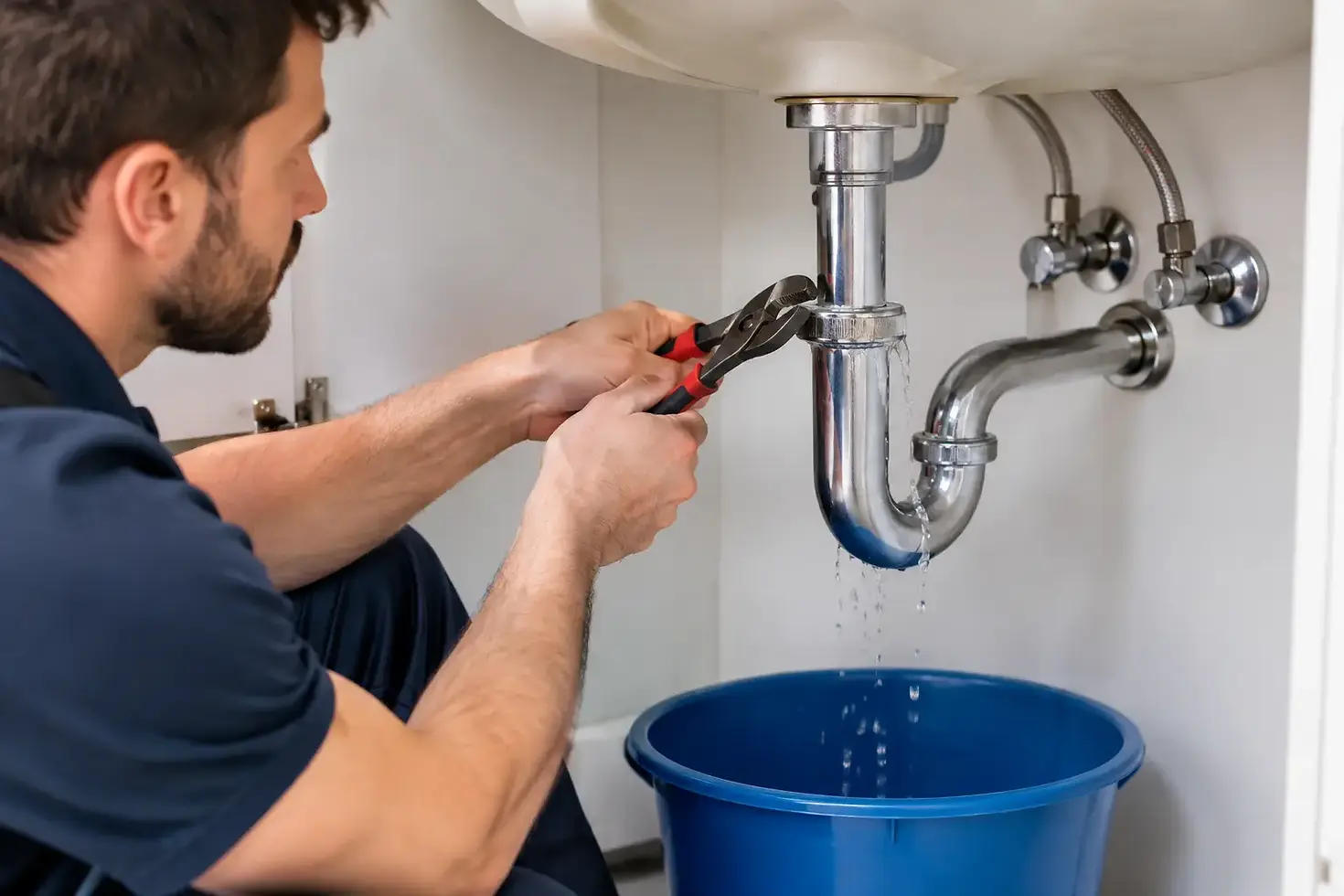
How to Stop Plumbing Leaks Before Damage Spreads
A small drip beneath a sink can soak cabinet floors, swell drywall, and create a mold problem long before it looks serious. Knowing how to stop plumbing leaks quickly can protect your Kenosha home from expensive water damage, but the right fix depends on where the water is coming from and why the connection failed.
Some leaks are simple homeowner fixes. Others are warning signs of aging pipes, hidden water damage, or a plumbing issue that needs professional repair. The goal is not to silence the drip for a few days. It is to stop the source, dry the area thoroughly, and make sure the surrounding materials have not already been affected.
Find the Source Before You Attempt a Repair
Water does not always appear directly below the leak. It can travel along a pipe, behind a wall, or across a floor joist before it becomes visible. Start by drying the area with towels, then watch closely while someone runs the faucet, flushes the toilet, or operates the appliance connected to the line.
Under sinks, check the shutoff valves, supply lines, drain trap, garbage disposal connections, and the seal around the sink itself. A leak that appears only while water is running may come from the drain or faucet. Water that collects even when nothing is running often points to a supply line, shutoff valve, or hidden pipe leak.
For toilets, look at the water supply connection, the valve behind the toilet, the base of the fixture, and the tank bolts. A loose supply nut can drip onto the floor, while water around the base may signal a failed wax ring or a cracked toilet base. Those repairs should not be delayed because moisture can damage the subfloor beneath the bathroom.
How to Stop Plumbing Leaks in an Emergency
If water is actively flowing, stop it before worrying about the exact repair. Every homeowner should know where the main water shutoff is located. It is often near the water meter, in a basement, utility room, crawl space, or mechanical area. Turning it off may temporarily interrupt water to the whole home, but it can prevent a much larger restoration project.
For a smaller, isolated leak, use the nearest fixture shutoff valve instead. The valves under sinks and behind toilets are designed for this purpose. Turn the handle clockwise until it stops, then open the faucet to relieve remaining pressure.
When a pipe bursts or water is spreading quickly, take these immediate steps:
Shut off the local valve or the home’s main water supply.
Turn off electricity to the affected area if water is near outlets, appliances, or the electrical panel. Do not enter standing water when electrical hazards are possible.
Move rugs, furniture, and stored belongings away from wet flooring.
Use towels, a wet/dry vacuum, or fans to remove surface water while arranging a permanent repair.
A temporary pipe clamp, repair sleeve, or plumber’s epoxy may slow a small pinhole leak. These products can be useful in a true emergency, but they are not a dependable answer for corroded pipes, split fittings, or failing valves. Treat a temporary patch as time to schedule the correct repair, not proof that the problem is solved.
Fix Common Leaks Without Making Them Worse
A leaking faucet often comes from a worn cartridge, O-ring, washer, or loose connection. Start by shutting off the water below the sink. If the leak is at a visible supply connection, gently tighten the nut with an adjustable wrench. Do not force it. Overtightening can crack a fitting, strip threads, or damage a flexible supply line.
For a leak at a drain connection, inspect the slip nuts and washers. Hand-tightening is usually the first step. If the washer is flattened, brittle, or misaligned, replacing it is better than repeatedly tightening the nut. Plumbing tape is helpful on threaded pipe connections when used correctly, but it will not repair a cracked pipe, worn gasket, or loose drain assembly.
A leaking showerhead can sometimes be resolved by removing it, cleaning mineral buildup from the threads, applying fresh plumber’s tape, and reinstalling it snugly. If the shower leaks behind the wall or drips from the valve even when it is off, the issue may be a worn cartridge or damaged valve body. That type of repair can require opening the wall and should be handled carefully to avoid a larger bathroom repair.
Do Not Ignore Hidden Leak Warning Signs
Not every plumbing leak makes a puddle. Hidden leaks are often discovered through changes in your home rather than visible running water. A sudden increase in your water bill, a musty odor, peeling paint, soft drywall, warped flooring, or discoloration on a ceiling deserves prompt attention.
You can also check for a possible hidden leak by turning off all faucets, appliances, and fixtures that use water, then watching your water meter. If the meter continues to move, water may be escaping somewhere in the system. This test does not identify the location, but it gives you a reason to investigate before moisture causes more damage.
In older homes, aging galvanized pipes, corroded fittings, and deteriorated supply lines can fail with little warning. Kenosha winters can add another risk. Pipes near exterior walls, unheated basements, garages, and crawl spaces may freeze when temperatures drop. Insulating vulnerable pipes and addressing cold-air gaps before winter can prevent a burst pipe and the major water damage that follows.
When It Is Time to Call for Professional Leak Repair
A homeowner can often handle a loose drain nut or replace a simple washer. Professional help is the safer choice when a leak is behind a wall, under a slab, near electrical components, or has damaged drywall, flooring, cabinetry, or insulation. It is also the right call if you have repaired the same leak more than once.
Repeated leaks are rarely just bad luck. They can point to water pressure issues, corroded pipe sections, poor prior installation, movement in the home, or materials that have reached the end of their service life. Repairing only the visible drip may leave the larger problem in place.
When water has reached building materials, the work may involve more than plumbing. Wet drywall can lose its strength, wood framing can retain moisture, and damp insulation may need replacement. A contractor who understands both leak repair and water damage restoration can help identify what must be repaired, dried, or replaced so the home is put back together correctly.
TRA Restoration & Remodeling brings more than 25 years of hands-on residential experience to plumbing leak repairs and the water damage work that can follow. Homeowners receive clear communication, competitive pricing, and workmanship backed by dependable warranties.
Prevent the Next Plumbing Leak
Regular checks are one of the simplest ways to avoid surprise water damage. Look beneath sinks every few months, especially after moving cleaning supplies or storage bins. Inspect washing machine hoses, refrigerator water lines, dishwasher connections, and the area around the water heater for moisture or corrosion.
Replace aging rubber washing machine hoses with quality braided lines, and do not leave appliances running when nobody is home for long periods. Keep an eye on toilet tanks that run constantly, because a failing fill valve or flapper can waste a surprising amount of water even when it does not create a visible floor leak.
It also helps to know what is normal in your home. Once you recognize the usual sound of your plumbing, water pressure, and monthly usage, unusual changes stand out faster. That early attention can be the difference between replacing a small fitting and restoring a damaged room.
A plumbing leak does not need to become a major home repair. Shut off the water, protect the area, and choose a repair that addresses the cause instead of covering it up. If moisture has entered walls, floors, or cabinets, acting promptly gives your home the best chance of a clean, lasting repair.


Comments