
Water Stained Ceiling Repair That Actually Lasts
- trangeloffjr
- Aug 10
- 5 min read
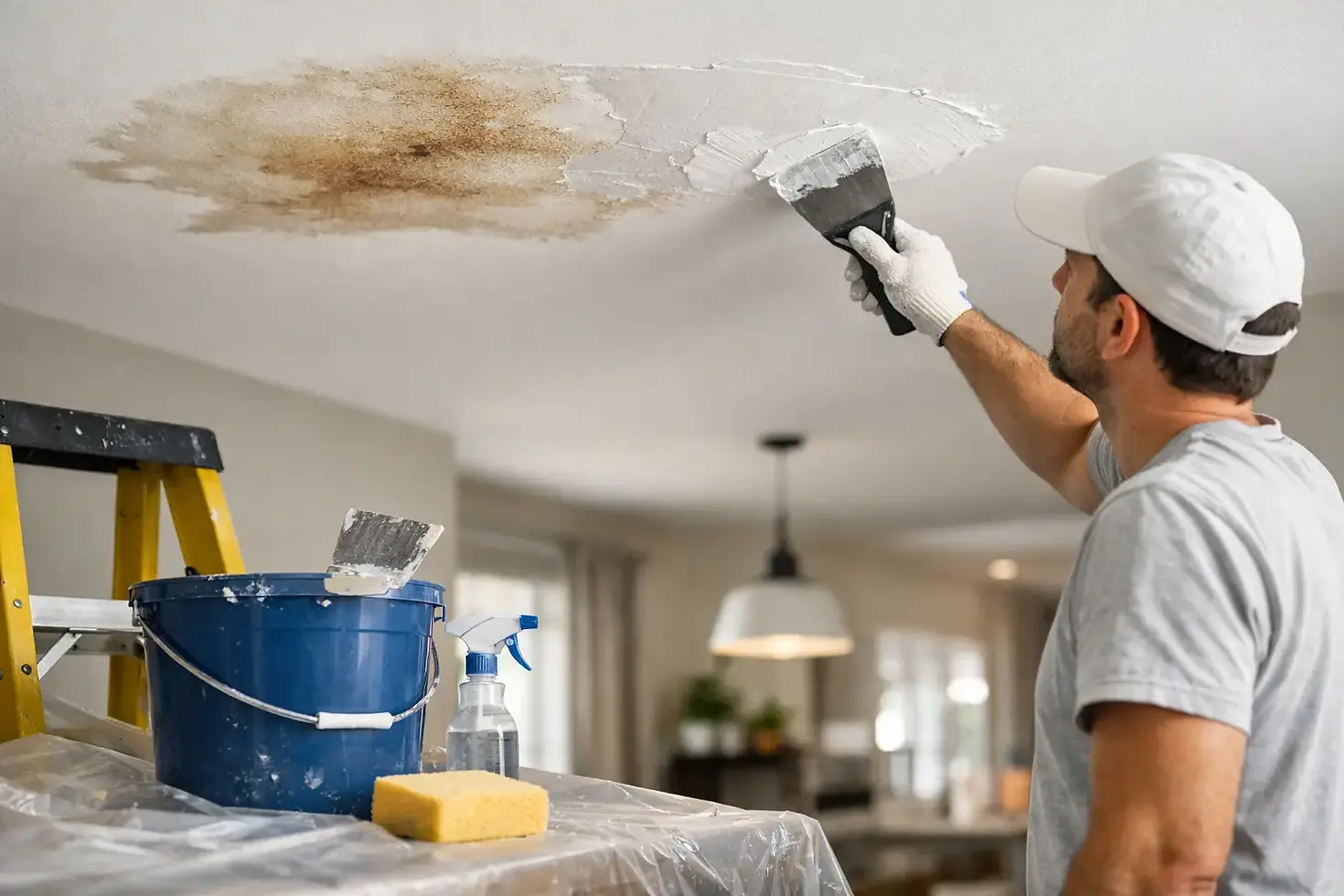
A brown ring spreading across a bedroom ceiling is not a paint problem first. It is evidence that water reached the drywall, and the visible stain may be smaller than the moisture damage above it. For Kenosha homeowners, water stained ceiling repair should begin by stopping the source, drying the area completely, and checking whether the ceiling materials are still sound.
Painting over a stain before those steps are complete can leave you with peeling paint, a returning water mark, hidden mold growth, or a soft section of ceiling that eventually fails. A proper repair protects the home, not just its appearance.
Start Water Stained Ceiling Repair by Finding the Source
The stain tells you where water collected, but it does not always identify where the leak started. Water can travel along roof framing, pipes, ductwork, or the top side of drywall before it finally shows itself in a ceiling below.
If the stain is under a bathroom, inspect the toilet seal, shower plumbing, tub drain, and supply lines. A ceiling stain beneath a kitchen or laundry area may point to a drain connection, dishwasher line, refrigerator supply line, or appliance overflow. Stains near an exterior wall or along the upper level of the home often relate to roof leaks, damaged flashing, clogged gutters, ice dams, or failed siding details.
Timing can help narrow it down. A stain that grows after rain is likely tied to the roof or exterior. A stain that appears after someone showers, runs the washing machine, or uses an upstairs sink is more likely a plumbing issue. Condensation around uninsulated pipes or attic ventilation problems can also create repeated moisture, especially during Wisconsin's colder months.
Do not assume a dry-looking stain means the problem is over. A one-time overflow may leave a harmless cosmetic mark after drying, but an active or intermittent leak needs investigation before repair work begins.
Know When a Stained Ceiling Is a Safety Concern
Drywall loses strength when it stays wet. Press gently around the affected area only if the ceiling looks stable. If it feels soft, bows downward, crumbles, or releases water when touched, keep people and furniture clear of the area. A sagging ceiling can hold a surprising amount of weight.
Turn off electricity to nearby ceiling lights or fixtures if water may have reached wiring. Do not remove a light fixture or open a wet ceiling when power is on. Water and electrical work should be handled cautiously, particularly when the source of the moisture has not been confirmed.
Small, dry stains without soft drywall may be candidates for a focused repair. Larger stains, recurring water marks, musty odors, visible mold, or damage that involves insulation and framing call for a more thorough assessment. The trade-off is straightforward: a quick patch costs less now, but replacing compromised material is the better value when moisture has weakened the ceiling or contamination is present.
Drying Comes Before Drywall Repair
Once the leak has been fixed, the ceiling cavity and surrounding materials need time to dry. Opening a small inspection area can be necessary when water has pooled above the drywall or soaked insulation. Wet insulation often cannot perform as intended and may need replacement rather than drying in place.
Fans and dehumidifiers can help with light damage, but they do not solve trapped moisture above a sealed ceiling. A moisture meter and professional inspection provide a clearer answer when the damage is extensive or has been present for an unknown length of time.
Homeowners should also look beyond the stain itself. Check nearby walls, baseboards, flooring, and the room directly above. Water follows gravity, but it also moves sideways through building materials. Catching related damage early can prevent a small repair from becoming a larger restoration project.
When mold may be involved
Mold does not automatically appear after every leak, but damp drywall, paper backing, insulation, and wood can support growth when moisture remains. Dark spotting, a persistent musty smell, or visible growth around a stain are reasons not to simply paint over the area.
The right response depends on the size of the affected area, the materials involved, and whether the moisture is still active. Removing damaged drywall and insulation may be more reliable than attempting to preserve materials that have been wet for too long. The goal is to leave the ceiling clean, dry, and structurally sound before closing it back up.
The Right Way to Repair a Water Stained Ceiling
After the source is corrected and the area is dry, the repair process depends on the condition of the drywall. If the ceiling is firm and the stain is old and limited, it may only need surface preparation, stain blocking, and repainting. If the drywall is swollen, soft, cracked, or sagging, cutting out the damaged section is usually the more dependable option.
For a drywall replacement, the affected material is removed back to solid, dry edges. New drywall is fitted, secured, taped, and finished with joint compound. Matching an existing ceiling texture takes experience, particularly with older homes where texture, repairs, and paint sheen may vary from room to room.
A quality finish also requires patience. Joint compound needs proper drying time between coats, and sanding should leave a smooth transition without visible ridges or dust trapped in the paint. Rushing this stage is one reason patched ceiling areas remain noticeable even after repainting.
Before applying ceiling paint, use a quality stain-blocking primer designed for water stains. Standard primer or ceiling paint alone may not stop brown or yellow discoloration from bleeding through. In some cases, two coats of stain blocker are needed, especially if the stain was dark or caused by tannins, rust, or smoke residue mixed with moisture.
Finish with a ceiling paint that matches the surrounding surface. Flat paint is common because it hides minor imperfections, but matching the existing color matters. Even white ceilings can vary significantly based on age, lighting, and previous paint choices. For the most consistent result, repainting the full ceiling is often better than blending a small repaired spot.
Repairs That Often Fail Too Soon
The most common mistake is covering the stain before the leak is fixed. The ceiling may look clean for a few weeks, then the discoloration returns after the next storm or plumbing use.
Another frequent problem is using regular paint without a stain-blocking primer. Water stains can migrate through fresh paint, leaving a faint yellow ring that becomes more obvious over time. Skipping drying time is equally risky. A sealed wet cavity can create odor, mold, and continued drywall deterioration behind an otherwise neat patch.
Some homeowners also patch only the visible damaged area when moisture has extended farther into the ceiling. This can leave weakened drywall at the edges of the repair. An experienced contractor checks the full extent of the damage instead of guessing based on the stain's outline.
When to Call a Professional
A homeowner may be able to repaint a small, fully dry stain after confirming it came from a one-time incident. But professional help is the practical choice when the cause is uncertain, the ceiling is soft or sagging, water has affected electrical fixtures, or the damage returns after weather events.
It also makes sense to call a contractor when the repair involves plumbing, roofing, insulation, drywall replacement, texture matching, and painting. Coordinating each part correctly matters. Fixing only the ceiling while leaving a roof leak or plumbing issue unresolved is not a repair that lasts.
TRA Restoration & Remodeling helps homeowners in Kenosha and nearby communities address the source of water damage and restore affected ceilings with skilled drywall and painting work. With more than 25 years of experience, competitive pricing, and workmanship warranties, our family-owned team focuses on repairs completed with care and clear communication.
A ceiling stain is your home's early warning sign. Address it while it is still a manageable repair, and you can protect the rooms, finishes, and peace of mind that make your house feel like home.


Comments