
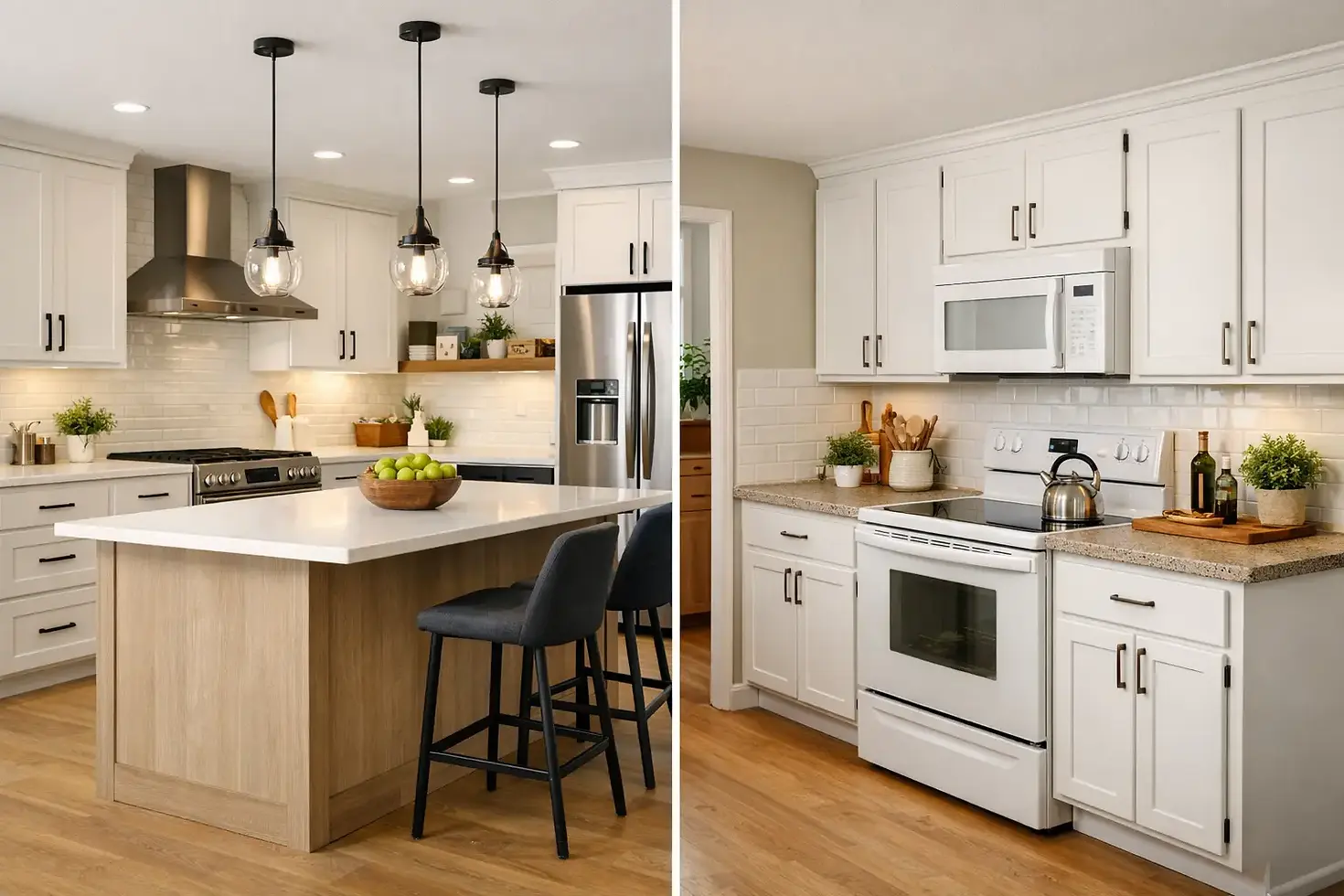
Kitchen Remodel vs Kitchen Refresh - Which Fits?
- trangeloffjr
- Aug 21
- 5 min read
A kitchen can feel dated long before it stops working. Worn cabinet finishes, poor lighting, tired flooring, and limited storage can make everyday meals more frustrating than they need to be. When homeowners begin planning an upgrade, the kitchen remodel vs kitchen refresh decision usually comes down to one question: should you improve what is already there, or rebuild the space around how your family lives now?
The right answer depends on the condition of your kitchen, the problems you want to solve, and how long you plan to stay in the home. A refresh can create a dramatic improvement without changing the room's layout. A full remodel offers deeper change and lasting functionality, but requires a larger investment and more planning.
What Is a Kitchen Refresh?
A kitchen refresh updates the visible surfaces and selected features while keeping the existing layout, cabinet boxes, and major plumbing and electrical locations in place. It is the practical choice when your kitchen is fundamentally sound but no longer feels clean, current, or personal.
A refresh may include cabinet painting or refacing, new hardware, countertops, a backsplash, updated lighting, new flooring, a sink and faucet replacement, or fresh paint on the walls and trim. Replacing aging appliances may also be part of the plan if their locations do not need to change.
This approach works especially well in many Kenosha-area homes where cabinets are solid but finishes have become worn or dated. Rather than tearing out good materials, a thoughtful refresh directs the budget toward the details homeowners see and use every day.
When a refresh makes sense
Choose a refresh when the room's workflow still works. If you have enough counter space, your cabinets function properly, and the sink, range, and refrigerator are where you want them, changing finishes can deliver strong results at a more controlled cost.
It is also a sensible option before selling a home. Neutral paint, updated lighting, modern hardware, and durable new counters can help a kitchen make a better first impression without committing to a full renovation. The same is true for homeowners who want a noticeable change now but expect to complete a larger remodel later.
A refresh does have limits. It will not fix undersized electrical service, a leaking supply line, water-damaged cabinet bases, poor ventilation, uneven subflooring, or an awkward layout. Covering a deeper issue may only delay a more expensive repair.
What Does a Full Kitchen Remodel Include?
A full kitchen remodel changes the kitchen at a structural or functional level. It may involve removing and replacing cabinets, changing the layout, relocating plumbing or electrical connections, installing new flooring, correcting damage behind walls, and upgrading lighting, ventilation, and appliances.
This is the better path when the room no longer supports your household. Perhaps two people cannot cook at the same time, pantry storage is inadequate, outlets are scarce, or the island blocks the natural path through the room. A remodel gives you the opportunity to solve those daily frustrations instead of decorating around them.
A complete project can also uncover and address hidden concerns. Older homes may have plumbing leaks, moisture damage, outdated wiring, drywall issues, or uneven floors beneath existing finishes. Handling these conditions correctly before new materials are installed protects the investment and helps prevent repeat work later.
When a remodel is worth the investment
A full remodel is often worthwhile when several core elements need replacement at once. If cabinets are failing, flooring is damaged, countertops are beyond repair, and the layout is inefficient, refreshing only one or two pieces can leave the kitchen feeling unfinished.
It is also the right choice if accessibility or family needs have changed. Wider walkways, lower or more usable work surfaces, better task lighting, added storage, and a more open layout can make the kitchen easier to use for years to come. Homeowners planning to remain in their homes long term often find more value in designing for daily comfort rather than accepting the limits of an old floor plan.
Kitchen Remodel vs Kitchen Refresh: The Real Differences
The clearest difference is scope. A refresh improves the appearance of an existing kitchen. A remodel rethinks the room's structure, systems, storage, and flow.
Cost follows scope, but it should not be viewed as the only deciding factor. A refresh generally costs less because it uses more of what is already in place and requires less demolition. A remodel has a higher upfront cost because it can include custom design work, new cabinetry, trades, permits, structural adjustments, and repairs discovered after walls or floors are opened.
Timing is another major consideration. Many refresh projects can be completed with less disruption because the kitchen remains largely intact. A full remodel usually means planning for a temporary meal-prep area and living without normal kitchen access for part of the project. Material availability, inspections, and the complexity of plumbing or electrical changes can affect the schedule.
Long-term value depends on the condition of the room. A refresh can be an excellent investment when it preserves quality cabinets and corrects cosmetic wear. A remodel tends to provide better value when it fixes functional defects, water damage, unsafe conditions, or a layout that no longer fits the home.
Start With the Problems, Not the Finish Choices
It is easy to begin with cabinet colors, tile samples, or countertop styles. Those details matter, but the best project begins by identifying what is not working.
Think through a normal weekday in your kitchen. Where do groceries collect? Is there a place for small appliances? Can more than one person prepare food comfortably? Are you constantly moving items because storage is limited? Do you notice soft flooring, a cabinet base that swells after a leak, flickering lights, or an exhaust fan that does little to clear steam and odors?
These answers reveal whether the project is cosmetic or functional. If the issue is mainly appearance, a refresh may be the smart move. If the problems involve layout, storage, safety, or damage, a remodel is usually the more responsible choice.
Budget for What You Cannot See
Whether you refresh or remodel, leave room in the budget for the condition of the home behind the finished surfaces. This is particularly important in older properties, where a small plumbing leak or prior water damage may not be visible until flooring, cabinets, or drywall are removed.
A dependable contractor should explain the expected scope clearly, help prioritize the work, and communicate promptly if an unexpected repair is found. Homeowners deserve to know what is necessary, what is optional, and how each decision affects cost and durability.
At TRA Restoration & Remodeling, that practical approach is backed by more than 25 years of experience, competitive pricing, and workmanship warranties designed to give local homeowners greater confidence in the work being completed.
How to Make the Right Choice for Your Home
A refresh is often the right fit when your kitchen has good bones and you want a clean, updated look without moving walls or utilities. A remodel is the better fit when the room has hidden damage, failing materials, an inefficient layout, or daily limitations that finishes alone cannot solve.
There is also a middle ground. Some homeowners keep the existing layout but replace cabinets, counters, flooring, lighting, and appliances. Others repaint cabinets and install new counters now, then plan a larger layout change after saving for the next phase. A good plan does not have to be all or nothing.
Before choosing, ask for a professional assessment of the cabinets, flooring, plumbing connections, electrical capacity, ventilation, and any signs of moisture. That conversation can prevent a cosmetic update from becoming a frustrating stopgap. The best kitchen project is the one that respects your budget today while making your home more comfortable, useful, and durable for the years ahead.


Comments